|
 THE VOLT // MIDWEEK ADJUSTMENT Issue 004 • 12 Aug 2026 • 5-minute read |
On the Rack Today | 01 | A squat-depth rule based on the job, your control, and repeatability. | | 02 | A pre-workout food decision that starts with the clock, not gym folklore. | | 03 | A seven-movement back session adapted from Ryan Terry’s Olympia prep. |
|
 |
01 / The Lead Lift |
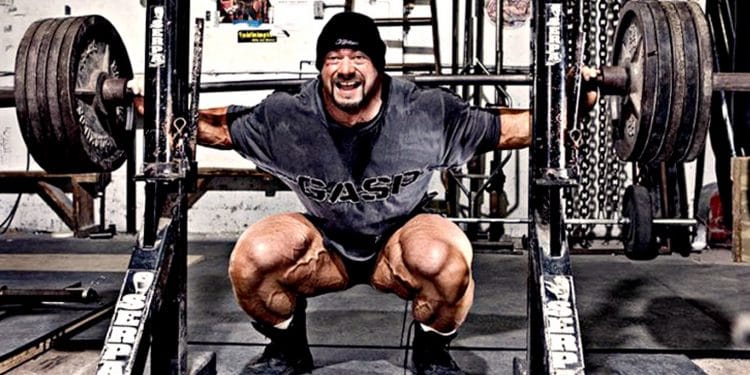
Your squat needs a job, not a sloganThe camera catches it: rep one reaches depth, rep five finishes two inches higher, and the load never changed. Before you blame your hips—or chase the floor—ask what depth this set is supposed to train. Your best squat depth is the deepest range you can control and repeat for the job. General strength and muscle work often lands around parallel or lower. Powerlifting needs the rulebook standard. Weightlifting needs comfort in a deep receiving position. Planned partials can serve a sport-specific task, but they are not a secret full-range replacement. Deeper can be useful. A small 10-week trial found more glute and adductor growth with full squats than half squats, while quadriceps growth was similar. Another trial found full-squat training transferred across more tested depths than parallel or half-squat training. Neither result appoints one universal bottom position. Try this on your next leg day: choose a moderate load and target depth; film one side-view set; compare the first and final rep for foot pressure, balance, torso control, and depth. Next session, change only one variable—load, stance, heel height, variation, or target depth. Gym science becomes much calmer when it has fewer moving parts. Stop higher or change the variation when pain, pinching, numbness, or loss of control appears. Persistent or worsening symptoms need qualified assessment, not a more aggressive warm-up. |
 |
02 / Fuel Check |
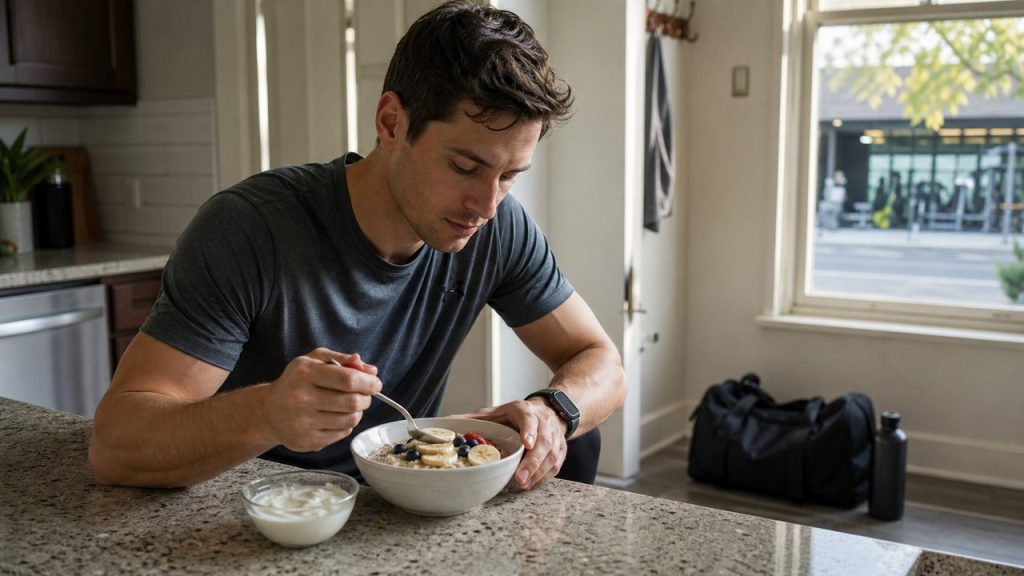
Let the clock choose the mealWhat: Eat a familiar mixed meal two to four hours before training when you can. At 60 to 120 minutes, make it smaller. Inside an hour, use an easy snack only if hunger or performance calls for it. Why: Carbohydrate matters most when the session is long, hard, high-volume, or follows a long gap without food. A 2022 systematic review found that extra carbohydrate immediately before ordinary resistance training did not reliably improve performance in lifters who had already eaten normally. Try: Three hours out: chicken, rice, and vegetables. One hour out: yogurt and fruit or cereal and milk. Rushing in: toast with jam or a banana. Use foods your stomach already knows. Limitation: A short lift after a regular meal may need nothing extra. Caffeine cannot repair chronic under-eating or poor sleep, and a giant “perfect” meal 30 minutes before squats is mostly a digestion experiment. Choose a pre-workout meal by the clock |
 |
03 / Coach's Card |
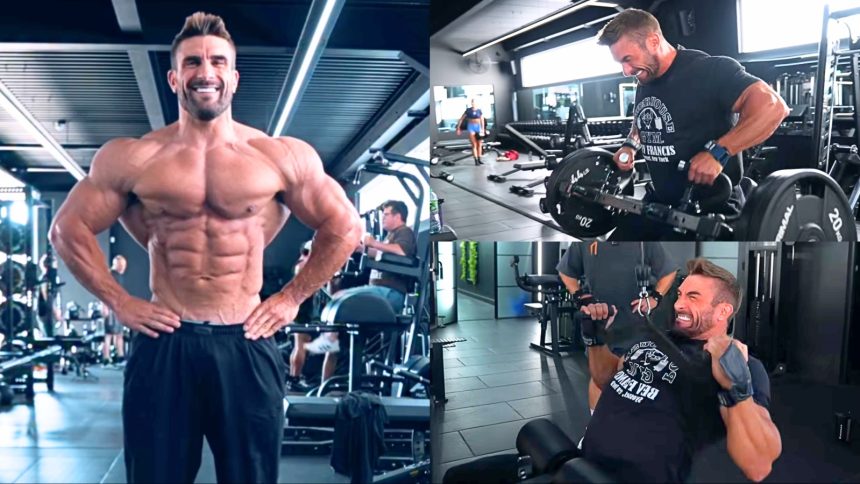
The recoverable back cardGoal: Back width, upper-back volume, and elbow-flexor work // Level: Intermediate Time: 40 to 50 minutes // Equipment: Dumbbells, pulldown, cable row, supported row or machine, back-extension station Recoverable back workout| Movement | Work |
|---|
| Chest-supported dumbbell row | 3 x 8-10, 2 RIR |
|---|
| Lat pulldown | 3 x 8-12, 1-2 RIR |
|---|
| Seated cable row | 2 x 10-12, 1-2 RIR |
|---|
| Machine hyperextension | 2 x 12-15 |
|---|
| Preacher curl | 2 x 10-15 |
|---|
Rest 90 seconds on rows and pulldowns, 60 seconds on the final two movements. Ryan Terry’s prep session used seven exercises; this version keeps the supported row, vertical pull, horizontal pull, hip-extension, and curl pattern without asking a normal Wednesday to cosplay as a two-a-day Olympia prep. Regress: Use lighter machine-supported rows and skip hyperextensions if they irritate your back. Progress: Add one rep per set until every set reaches the top of its range, then add the smallest load. Safety: Keep the torso supported on rows, control the stretch, and stop sets when position changes—not when the stack finally wins. See Ryan Terry’s full seven-movement session |
 |
04 / The Strength Bulletin |
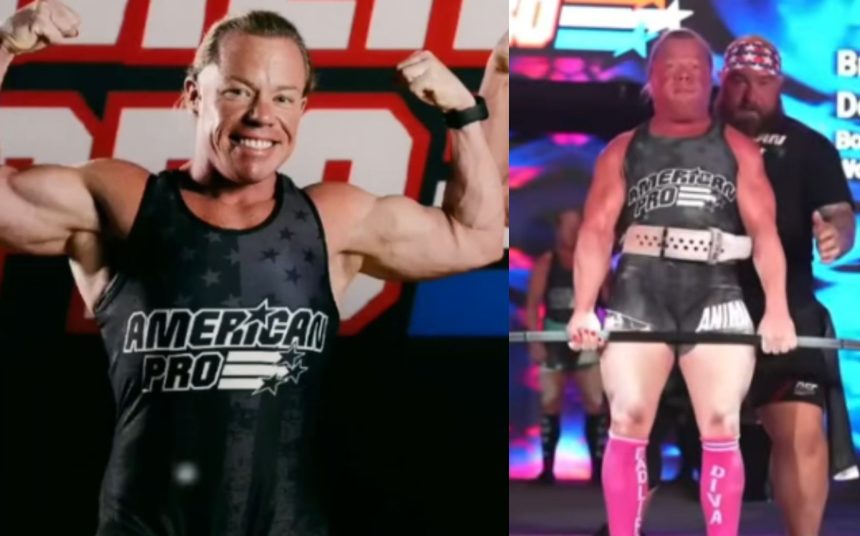
Brittany Bowles missed a squat, then took the totalWhat happened: Brittany Bowles totaled 581 kilograms (1,280.9 pounds) in the under-60-kilogram class at the August 7–8 PLU American Pro, edging the previous raw total record by one kilogram. She went eight-for-nine, with a 215-kilogram squat, 137.5-kilogram bench, and 228.5-kilogram deadlift. Why it matters: A missed third squat did not end the record attempt. Bowles went three-for-three on bench, then locked out the record on her final deadlift. One miss changed the route, not the destination. Meet note: The performance also earned her the women’s Best Lifter award. Treat the reported cut and meet-day intake as her account, not a template to copy. See Bowles’ complete attempt breakdown |
05 / One More Rep |
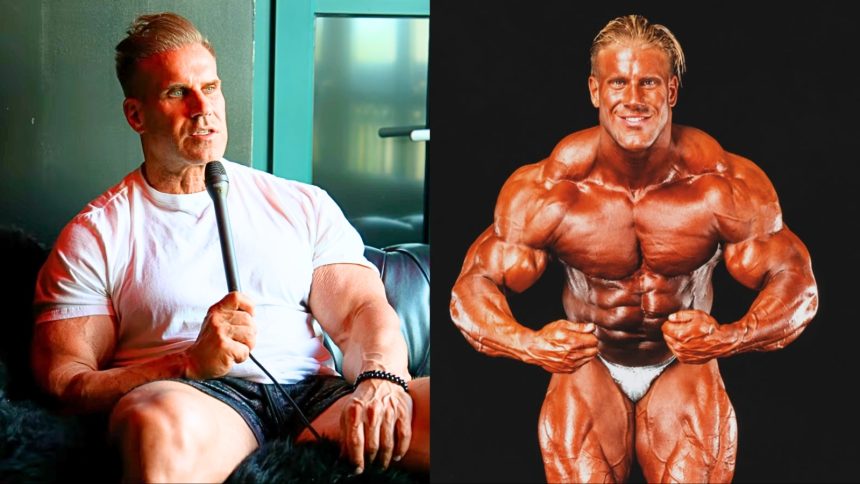 Jay Cutler’s unglamorous secret: Progression, consistency, and dedication beat the search for a professional-only trick. Return to the basics. |  Charles Glass’ mirror rule: Learn with feedback, then practice without the mirror because the stage will not provide one. Train the presentation. |
|
06 / Locker Room Check What usually knocks your training week off course first?One answer click will submit immediately. We will use percentages—not raw counts—to shape a later Build the Week issue. |
From FitnessVolt. Training and nutrition claims are linked to reviewed FitnessVolt articles and primary sources. |
THE VOLT is FitnessVolt's spotter for smarter training: useful plans, clear cues, and no wasted reps. You are receiving this because you subscribed to FitnessVolt updates. View online • Manage preferences • Unsubscribe |
|


 FitnessVolt Newsletter